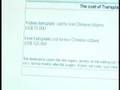
This shocking video report features hidden camera footage of organs being sold in China. An undercover investigation by BBC News finds that China has a flourishing trade of organs This shocking video report features hidden camera footage of organs being sold in China. An undercover investigation by BBC News finds that China has a flourishing trade of organs from executed prisoners. China is becoming the destination of choice for rich foreigners in need of organ transplants. One hospital said it could provide a liver for roughly $100,000. The majority of these prisoners are political dissidents, those who simply protest their Government. China has more executions than any other country in the world. Officials told undercover reporters that executions increase prior to national holidays, so many organs are available around those times. (more) (less) 2007.5.23...china human right SIGN UP AND SHOW SUPPORT: WWW.UNWATCH.ORG Hillel Neuer of UN Watch exposes the hypocrisy of the UN Human Rights Council (March 23, 2007 SIGN UP AND SHOW SUPPORT: WWW.UNWATCH.ORG Hillel Neuer of UN Watch exposes the hypocrisy of the UN Human Rights Council (March 23, 2007). For the first time ever, the Council president, Ambassador Luis Alfonso de Alba of Mexico, rejects the speech as "inadmissible" and bans it from ever being delivered again. "A diplomatic moment to remember..." — New York Sun, March 30, 2007 "YouTube's Top Rated, Most Discussed, Most Linked, Most Viewed Video of the Week..." — YouTube.com, March 2007 "Wow...a must see clip" — Little Green Footballs blog "Bloggers cheer. . . a stunning rebuke of the U.N. Human Rights Council" — Slate.com "Council President Luis Alfonso de Alba ruled the remarks inadmissible. . . in the depths of the U.N., this was of course logical: Mr. Neuer's commentary had been accurate..." — Wall Street Journal To comment, visit http://blog.unwatch.org. (more) (less) |
| Up to 100 people have died in riots in Tibet against Chinese ruling authorities. Police used tear gas during clashes in the capital Lhasa, as Sky's China correspondent Up to 100 people have died in riots in Tibet against Chinese ruling authorities. Police used tear gas during clashes in the capital Lhasa, as Sky's China correspondent Peter Sharp reports. (more) (less) China has detained two of the nation's top human rights advocates shortly before a blind rights activist was due to stand trial, marking what observers said may be a China has detained two of the nation's top human rights advocates shortly before a blind rights activist was due to stand trial, marking what observers said may be a concerted crackdown on activists. Beijing police told state media they had detained Gao Zhisheng, a human rights lawyer who has also campaigned for Chen's release. Late on Thursday, 10 prominent Beijing intellectuals, including senior lawyer Zhang Sizhi and liberal economist Mao Yushi, issued a statement decrying Xu's detention. Gao, forty two, has been one of China's boldest defendants for a variety of controversial causes, including labour activists, protesting farmers, and members of Falun Gong, the outlawed spiritual group. (more) (less) Mainland Affairs Council Chairman Joseph Wu on Friday met with three human rights activists from the United States and Canada. Two of these were the co-authors of Mainland Affairs Council Chairman Joseph Wu on Friday met with three human rights activists from the United States and Canada. Two of these were the co-authors of a controversial report on human rights abuses in China. The report says that China has harvested organs from executed Falun Gong practitioners. The activists called on Taiwan to oppose such human rights abuses in China. Wu said that Taiwan was concerned about Falun Gong members in China, as well as other groups who have been subject to human rights abuses. Wu said, "As well as the harm that Falun Gong has suffered in China, churches that meet in private homes and Muslims in Xinjiang have also suffered at the hands of the Chinese authorities. If these [abuses] are added together, I think that we in Taiwan as well as people everywhere would hope to see defenders of human rights work together to push forward human rights in China." The third activist who met with Wu was Chinese-born Dr Wang Wenyi. She became famous earlier this year when she shouted at Chinese President Hu Jintao when he visited the United States in April. Wang said that most of China's 1.3 billion people are unaware of the country's human rights abuses due to the state's tight control on the media. (more) (less) Amnesty International China Human Rights Forum http://www.cntv.us/en/index.php?option=com_content&task= view&id=1701&Itemid= |
| From EuroNews.net Thanks Pro Tv cameraman Sergiu Matei who shoot the footage show In God's Name special debuting on CBS Chinese soldiers shooting at Tibetan pilgrims. http From EuroNews.net Thanks Pro Tv cameraman Sergiu Matei who shoot the footage show In God's Name special debuting on CBS Chinese soldiers shooting at Tibetan pilgrims. http://www.protv.ro/stiri/international/exclusive-footage-of -chinese-soldiers-shooting-at-tibetan-pilgrims.html China caught red-handed on ethnic cleansing in Tibet and Darfur genocide,and Burma crisis. (more) (less) In the wake of the Olympics, the benefits of Beijing's rapid economic development is not being felt by many of the capital's residents. Al Jazeera's Melissa Chan reports http://www.ted.com Musician and activist Peter Gabriel explains the personal motivation behind his work with human-rights watchdog Witness. He shares http://www.ted.com Musician and activist Peter Gabriel explains the personal motivation behind his work with human-rights watchdog Witness. He shares stories of everyday people using video cameras to expose human rights abuses around the world, and poses the question: if injustice happens and a camera is there to capture it, can it be ignored? Peter Gabriel first took the musical stage by storm with the band Genesis, but has enjoyed a successful solo career with hits like "In Your Eyes." In 1989 he founded the Real World label for global music and the Real World Studios in Bath, England. In 1992 he co-founded Witness, a watchdog organization that gives video cameras to ordinary citizens to document human-rights abuses, so the perpetrators may be brought to justice. (Recorded February 2006 in Monterey, CA. Duration: 14:50) (more) (less) |
| This movie verifies whether or not the CCP dictatorial regime is qualified to hold the Beijing Olympic Games in 2008, thereby revealing their seeming civilization and domestic political corruptions This movie verifies whether or not the CCP dictatorial regime is qualified to hold the Beijing Olympic Games in 2008, thereby revealing their seeming civilization and domestic political corruptions. 制作:不明 (more) (less) Despite attempts at reform, the UN Human Rights Council is being hijacked by repressive regimes, who evade scrutiny of their abuses, attack Western democracies, and undermine Despite attempts at reform, the U.N. Human Rights Council is being hijacked by repressive regimes, who evade scrutiny of their abuses, attack Western democracies, and undermine the very concept of human rights. For more information: www.unwatch.org/UnderAssault (more) (less) From http://www.sexybeijing.tv In this episode meet the Bad Boys of Beijing when Sufei ask the question: "Why is it that From http://www.sexybeijing.tv In this episode meet the Bad Boys of Beijing when Sufei ask the question: "Why is it that good girls like such bad boys?" Also, now that the Hanukkah season is here, buy the greatest hits from our first season on DVD: http://www.sexybeijing.tv/new/store/index.htm (more) (less) |
| Youth for Human Rights has put out a series of short videos each one depicting one of the 30 human rights as listed in the United Nations Declaration on Human Youth for Human Rights has put out a series of short videos each one depicting one of the 30 human rights as listed in the United Nations Declaration on Human Rights. The first three of these are available on iTunes for download. (more) (less) China, host 2008 Olympic games continues their cultural genocide, geocide and occupation & oppression of the people of Tibet. The horror continues. To find our more China, host 2008 Olympic games continues their cultural genocide, geocide and occupation & oppression of the people of Tibet. The horror continues. To find our more - www.studentsforafreetibet.org (more) (less) Protests against China & its poor human rights record. APEC : Further Protests in Sydney Australia...APEC Australia Sydney China human rights bbc report on china...china human rights |
4/01/2008
Με Αίμα βαμένοι οι Ολυμπιακοί Αγώνες του Πεκίνου
| ||||||||||||||||||||
| ||||||||||||||||||||
| <<> <> 1 2 3 4 5 6 7 8 9 10 Next > End >> | ||||||||||||||||||||
| Latest News |
|---|
Κίνα... Ένας Κόσμος... Ένα Όνειρο... Ένα μεγάλο Ανθρωπιστικό...Πρόβλημα...
One World, One Dream, One Big Human Rights Problem
AFP
The media has also been suppressed in China. Police roughed up journalists at a protest by Reporters Without Borders on Monday in Beijing. Here a handout issued by the group shows handcuffs as the five rings in the famous Olympic symbol.
The Beijing 2008 Olympics are just one year off as of August 8. As the country celebrates the countdown to the Summer Games, German commentators take a critical look at the country's democratic and civil liberties deficiencies.
August 8 is the start of the one-year countdown until the 2008 Summer Olympics begin in Beijing. The Middle Kingdom is using the games as a coming-out party to showcase a communist country that in less than 50 years has emerged from practically feudal conditions under Mao to become one of the greatest economic success stories of the new millennium.
But this week also underscores the contradictions of the dictatorship as it prepares for its golden moment on the world stage. When it comes to respecting human rights, the country could use the kind of ambitious and forward-looking reforms that have made its economy so successful.
Earlier this week, authorities arrested journalists from the press freedom non-governmental organization Reporters without Borders after they unfurled a banner outside the Olympic Organizing Committee's offices in Beijing protesting against the incarceration of 29 Chinese reporters. The banner depicted the Olympic rings as handcuffs -- a symbol of the lack of freedom of speech in China. Arrests were also made of Free Tibet activists who hung a banner reading, "One World, One Dream, Free Tibet 2008" on the Great Wall of China.
Meanwhile, a group of 40 prominent Chinese dissidents, some of whom are in jail, published an open letter to President Hu Jintao and International Olympic Committee President (IOC) Jacques Rogge. In the missive, they called for the communist government in Beijing to use the opportunity presented by the Olympics to give amnesty to political prisoners, permit exiled Chinese to return and provide just compensation to people forced to move because of massive infrastructure projects like the Three Gorges Dam. They also demanded the establishment of free unions as well as an independent committee to oversee Olympic spending.
Amnesty International has also lashed out at China for civil liberties deficiencies. "Unless the Chinese authorities take urgent measures to stop human rights violations over the coming year, they risk tarnishing the image of China and the legacy of the Beijing Olympics," said Irene Khan, secretary general of Amnesty International.
PHOTO GALLERY: CHINA PREPARES FOR 2008 OLYMPICS
Click on a picture to launch the image gallery (10 Photos)
German commentators on Wednesday look critically at the developments in China, but also see the Beijing Olympics as an opportunity for the government to implement greater democracy.
The business daily Handelsblatt writes:
"Probably no event has ever before been so thoroughly planned in China as the 2008 Olympics. Both the government and the Communist Party know that the Summer Games can give a new development boost not only to Beijing but to the whole of the Middle Kingdom. If China's society succeeds in presenting itself as an open and friendly host, then the benefits will make themselves clear in the form of ringing cash registers."
"But whether the People's Republic succeeds in giving itself a modern image also depends on how it behaves towards its critics. In that respect, the outlook still looks dark. Anti-AIDS activists are oppressed, the foreign press is harrassed and dissidents are banished to labor camps. The government in Beijing is making a serious mistake if it believes that it only needs to silence unpleasant journalists, people who have been forcibly resettled and dissidents in order to transmit the image of a clean China. As long as China rejects universal standards when it comes to human rights, this dream will remain unfulfilled. Seldom before has the Chinese leadership had such a large opportunity to risk implementing more democracy. It only needs to use it."
The center-left Süddeutsche Zeitung writes:
"Despite the fact that the organizers want the Olympics to be apolitical, criticism will grow louder in the next 12 months. Bejing 2008 will be both an athletic and political event. The Chinese government itself was responsible for the excessive national ambition during the bid phase and making the pledge to better respect human rights. More than anything, though, the games will not remain apolitical because they are symptomatic of China's real dilemma. The country wants to act and be respected like a major power and it wants to be accepted in Europe and America, but without having to demonstrate any particular responsibility or political or moral superiority. But any country that travels with a checkbook to Zimbabwe, that supports a dictator who tolerates the genocide in Sudan because of his love for oil, that runs internment camps in its own country and that censors and arbitrarily detains people, can't exactly expect undivided sympathy and nor can it invoke the Olympic peace."
"Realpolitik offers China a chance to be honored for its achievements in opening up the country and implementing reforms in recent years. The country is at the helm of the Asian modernization movement and serves as a model for many of its neighbors. It is also becoming a competitor to the US in terms of its attractiveness as a business location."
"Still, the government in Beijing is obviously underestimating the political baggage that comes with these Olympics. Just as the West even today understimates China's ambitions and has no answer to its own dilemma: namely, how to exercise influence over the would-be world power. Both sides could learn a lot from each other. Let the games begin."
The center-right Frankfurter Allgemeine Zeitung writes:
The Financial Times Deutschland writes:
"The main point for China in this epic production is to present an image of a modern, open country. This also provides an opportunity for the West to exert some influence on Beijing."
"Last week, China finally agreed -- after years of resistance -- to participate in a United Nations peacekeeping mission to Darfur. Pressure from Hollywood stars who threatened to boycott the 'genocide games' -- including Steven Spielberg -- has supposedly played a role. Spielberg has been hired to help produce the opening ceremonies. Fears that too much attention will also be focused on the Chinese occupation of Tibet has also led Beijing to re-open dialogue with the Dalai Lama."
"The West should use this historic opportunity, but without overplaying its hand. Closing some of the distance between the West and the Far East would be worth far more than a China that seals itself up after the games."
-- Daryl Lindsey, 3:00 p.m. CET
RELATED SPIEGEL ONLINE LINKS
Εγγραφή σε:
Αναρτήσεις (Atom)